01
What we heard
Marketing said the leads were there; sales said the opportunity was not. Our first job was to give both teams a shared definition of quality and a shared view of the journey.
Paid demand, lifecycle automation, and sales intelligence redesigned as one measurable buyer journey.
Marketing generated volume but sales distrusted lead quality. Campaigns, CRM stages, and lifecycle communication operated as separate systems.
We designed a shared revenue model, rebuilt acquisition around buying signals, and automated lead progression without sacrificing personalization.
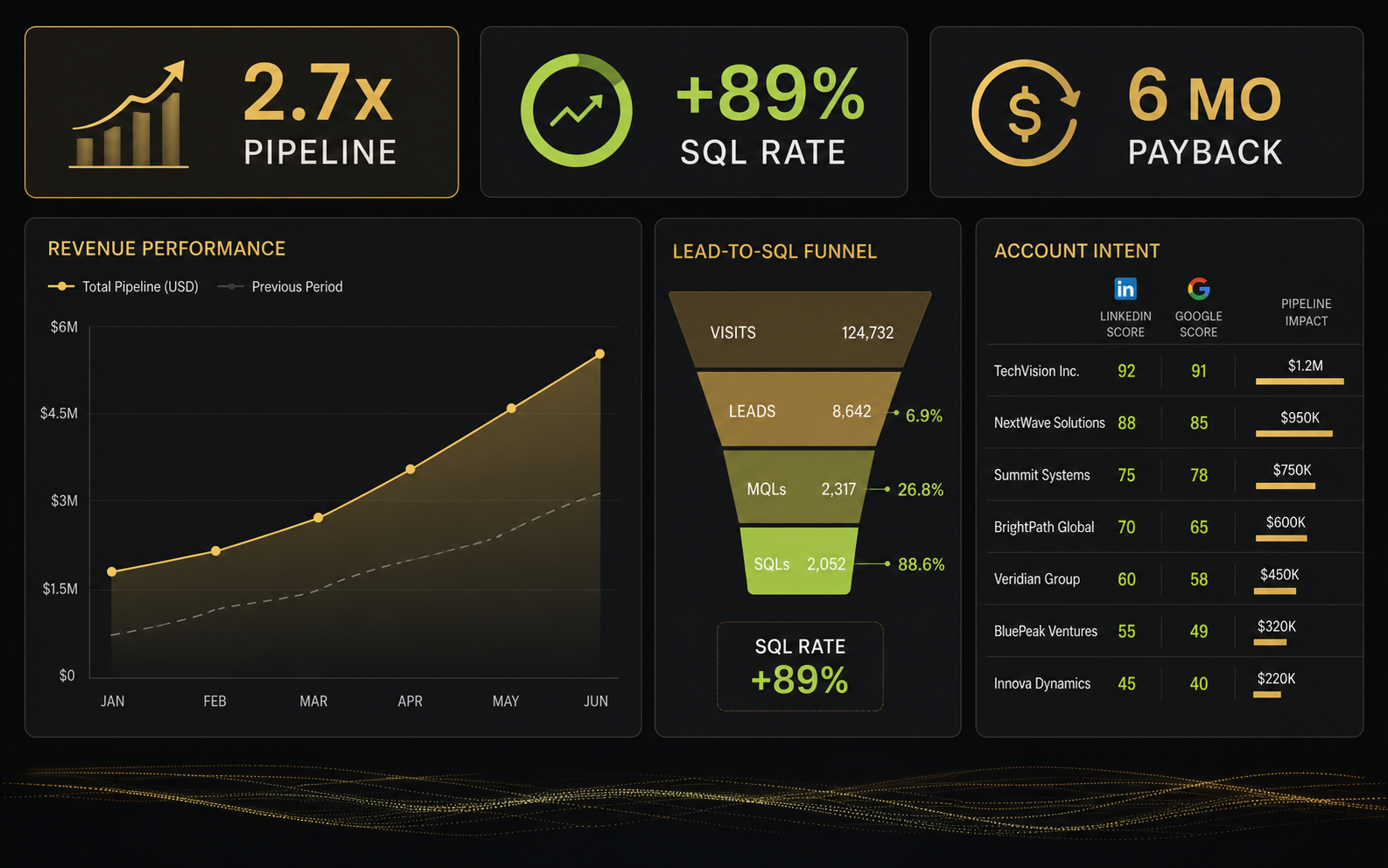
LinkedIn + Google Search Snapshot
A representative performance view connecting account intent, lead progression, and pipeline value so marketing and sales could optimize toward the same commercial outcome.
Representative visualization · Results shown are from this engagement
The work moved through three connected stages: listening closely enough to find the real constraint, operating as one team, and turning evidence into a decisive breakthrough.
What we heard
Marketing said the leads were there; sales said the opportunity was not. Our first job was to give both teams a shared definition of quality and a shared view of the journey.
How we collaborated
We ran joint working sessions with growth, revenue operations, and sales leadership. Weekly pipeline reviews replaced channel-only reporting, while sales feedback was tagged and returned to campaign decisions.
The breakthrough
The turning point came when CRM progression, not form volume, became the optimization signal. Media, nurture, and sales routing could finally improve the same commercial outcome.
Each workstream had an owner, an evidence standard, and a clear connection to the commercial outcome. This kept execution fast without turning the engagement into disconnected tactics.
Mapped the full lead-to-revenue journey
Rebuilt Google and LinkedIn campaigns by buying intent
Created score-based nurture and sales routing
Installed a pipeline dashboard used by marketing and sales